
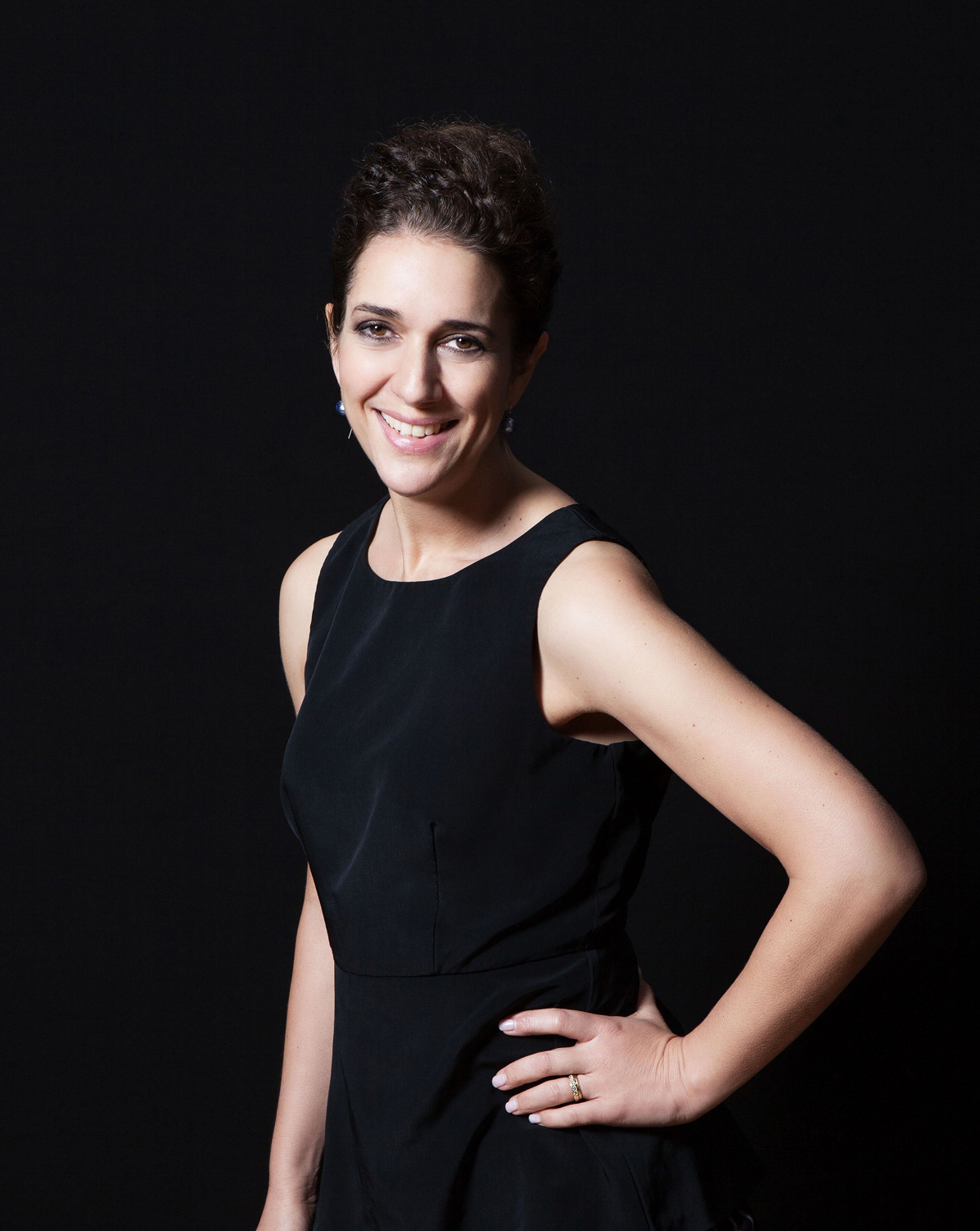
Juliane Banse è nata in Germania, ma è cresciuta a Zurigo dove ha iniziato gli studi musicali fin dall’infanzia: dopo aver studiato violino e danza classica, ha iniziato gli studi di canto all’età di 15 anni con Paul Steiner. Dopo il diploma in canto ha seguito i corsi di perfezionamento al Conservatorio di Monaco con Daphne Evangelatos e Brigitte Fassbaender. Ha vinto numerosi primi premi in concorsi internazionali come il “Gesangswettbewerb des KulturForums München” e il “Grand Prix Franz Schubert” (Vienna).
Nel 1989 è stata invitata da Harry Kupfer alla Komische Oper Berlin per debuttare come Pamina e grazie all’enorme successo ottenuto è stata invitata nuovamente per interpretare ruoli come Despina, Ilia, Zerlina e Susanna. Da questo momento ha avuto inizio la carriera internazionale di Juliane Banse che l’ha portata in prestigiosi teatri quali Deutsche Oper Berlin, Bruxelles, Colonia, Lipsia, il Festival di Salisburgo, Glyndebourne e l’Opera di Vienna, con la quale dal 1995 ha una collaborazione fissa.
Nella stagione 1998/99 ha avuto un grande successo di critica e di pubblico interpretando a Zurigo l’opera di Heinz Holliger Schneewittchen, cui sono seguiti il debutto nel ruolo di Ighino nel Palestrina di Pfitzner a Vienna e il debutto alla Bayerische Staatsoper di Monaco, nel ruolo di Pamina. Ha inoltre ottenuto un grande successo come Pamina e come Sophie nel Rosenkavalier a Vienna.
Ha proseguito cantando il ruolo di Sophie all’Opera di San Francisco, l’ Acis e Galatea di Haendel e La piccola volpe astuta di Janacek a Monaco di Baviera. Ha cantato il ruolo di Marzelline nel Fidelio per la direzione di Sir Simon Rattle con la Filarmonica di Berlino, di cui è stata realizzata una registrazione dalla EMI.
Juliane Banse affianca alla carriera operistica un’importante carriera concertistica, che la vede protagonista di Liederabend e concerti nelle più importate sale del mondo. Nel 1994 ha debuttato nella “Lulu-Suite” di Berg con la Filarmonica di Vienna sotto la direzione di Claudio Abbado. È stata invitata nuovamente per cantare sotto la bacchetta di Carlo Maria Giulini e di Andrè Previn. Juliane Banse ha debuttato negli Stati Uniti con la Sinfonia n.2 di Mahler con la St. Louis Symphony Orchestra diretta da Leonard Slatkin. Juliane Banse appare spesso in concerto con Helmut Rilling. Nelle ultime stagioni si ricordano La Creazione di Haydn sotto la bacchetta di Sir Simon Rattle, e molte interpretazioni di sinfonie di Mahler, fra cui la Sinfonia n.8 con Lorin Maazel e i Wiener Philharmoniker, la Sinfonia n.4 con la Cleveland Orchestra e P. Järvi e con Riccardo Chailly e il Concergebow di Amsterdam in una tournèe in Giappone, la Sinfonia n.2 con i Wiener Philharmoniker e ancora Simon Rattle. Si segnalano inoltre i concerti con l’Orchestra della Rai di Torino e Jeffrey Tate, la Tonhalle di Zurigo con M. Janowski, con Ingo Metzemacher ad Amburgo e Sir Simon Rattle a Berlino (Johannes Passion di Bach , nel 2002); la Nona Sinfonia di Beethoven, la Passione secondo San Giovanni, la Passione secondo San Matteo e la Messa in si minore di Bach, poi Les Illuminations di Britten e Salve Regina di Schubert
Juliane Banse ha inciso numerosissimi dischi fra i quali si ricordano un CD di Lieder e duetti con Brigitte Fassbaender, un disco di Schumann con Olaf Bär e Helmut Deutsch (EMI) gli Altenberg-Lieder e la Lulu-Suite di Berg con Claudio Abbado (DGG) e l’oratorio di Mendelssohn “Paulus” con Helmuth Rilling (Hänssler), La 4a Sinfonia di Mahler con la Cleveland Orchestra e Pierre Boulez. Si segnala inoltre Lobgesang di Mendelssohn con Ashkenazy, L’Oratorio di Natale di Bach.
The German soprano, Juliane Banse, was born in the South of Germany and spent her childhood in Zürich, Switzerland. She began playing the violin at the age of five and whilst still at school trained as a ballerina at the Zürich Opera where she also appeared on stage and did a full concert at the Zürich Opera. She began singing lessons at the age of fifteen, her teachers being Paul Steiner and Ruth Rohner (Opera Zürich). After leaving school she continued her studies with Brigitte Fassbaender and Daphne Evangelatos in Munich. She has been awarded numerous scholarships and prizes. In June 1989 she won First Prize in the singing competition of the Kulturforum, Munich, and in December 1993 the International Franz Schubert Institute awarded her with the Grand Prix Franz Schubert for her interpretation of that composer’s works.
Juliane Banse made her operatic debut in 1989 as Pamina Harry Kupfer’s staging of The Magic Flute at the Komische Oper Berlin. She was subsequently reinvited for Ilia in Idomeneo in 1991 and for Susanna in Le Nozze di Figaro in 1992. Further engagements led her to Brussels (Pamina and Despina), Salzburg (Sophie), Glyndebourne (Zerline), Vienna (Zdenka, Pamina, Susanna, Sophie, Marzeline, etc.), Deutsche Oper Berlin (Pamina, Sophie and Massenet’s Manon), and Cologne (Musetta in La Bohème), and Leipzig.
The season 1998-1999 commenced like a bombshell. The international press showered Juliane Banse with rave reviews for her performance of the title role in Heinz Holliger’s new opera Schneewittchen (Snow White), premièred in Zürich. Later this season she will sing Ighino in Pfitzner’s Palestrina in the new staging at the Vienna Opera. The same season she also sang the title role in Massenet’s Manon at the Deutsche Oper in Berlin. In December 1999 she made her debut at the Bayerische Staatsoper Munich as Pamina.
Juliane Banse’s work as a concert singer is of equal importance to her and she appears frequently in concerts and recitals all over the world. She regularly appears with Helmuth Rilling. In November 1994 she made her debut with the Vienna Philharmonic under Claudio Abbado, where she sang Berg’s Lulu-Suite. The orchestra immediately re-invited her for concerts with Carlo Maria Giulini and André Previn. Other renowned conductors with whom she has been closely associated are Pierre Boulez, Riccardo Chailly, Lorin Maazel, André Previnand, Simon Rattle.
Juliane Banse is a dedicated Lieder singer. A recital tour of Germany in May 1997 with Ingeborg Danz, Christoph Prégardien and Thomas Quasthoff was acclaimed by audience and press, a project which was revived in 2000 with Olaf Bär. After the final recitals of the Schubert Series in Cologne, the press hailed her as ‘Star of the Evening’. In 1999 she gave chamber music concerts with Jochen Kowalski and Maria Graf, as well as several recitals with Andreas Schiff, Helmut Deutsch and Irwin Gage, amongst other venues at the Schubertiade Feldkirch where she is a regular guest.
Juliane Banse made her American debut in 1995 with Mahler’s Symphony No 2 with the St Louis Symphony Orchestra under Leonard Slatkin and at the Indianapolis Symphony Orchestra under Raymond Leppard (Haydn’s Seasons). Under the baton of Sinopoli she recorded Berg’s Sieben frühe Lieder with the Staatskapelle Dresden for Teldec. With the Berlin Philharmonic she performed Haydn’s Creation under Sir Simon Rattle.
Highlights of 1998 included Berg’s Altenberg-Lieder with the Bamberg Symphony and several performances of Mahler’s symphonies with the Vienna Philharmonic, and the Cleveland and Philadelphia Orchestras. She drew rapturous reviews for her 1998 New York recital debut on Lincoln Center’s Art of the Song series. She performed more Mahler in 1999, this time the Symphony No 8 with the Berlin Philharmonic and Haitink and Symphony No 2 on a tour with the Vienna Philharmonic under Sir Simon Rattle. Other highlights of recent seasons include Britten’s Les Illuminations and Schubert’s Salve Regina on tour in the USA with the Munich Chamber Orchestra; Mahler’s Symphony No. 2 with Simon Rattle and the Vienna Philharmonic at Salzburg, Edinburgh and the BBC Proms in London, and a recital at Carnegie Hall with pianist Maurizio Pollini.
During the 2000-2001 season Juliane Banssang Haydn’s Creation with the San Francisco Symphony under Helmuth Rilling; lieder recitals in Berlin, Edinburgh, London, Stuttgart, Salzburg and Zürich; and concerts with the Munich Chamber Orchestra, Vienna Philharmonic, London Philharmonic, and the Philharmonisches Staatsorchester of Hamburg. She returned to the Minnesota Orchestra’s Sommerfest in a varied repertoire of opera arias, lieder and oratorio, and to the Oregon Bach Festival in Beethoven’s Symphony No. 9; and Bach’s St. John Passion, (BWV 245), Mass in B Minor (BWV 232), and St. Matthew Passion (BWV 244).
Juliane Banse’s recordings include Othmar Schoeck’s Lieder and Brahms, Dvorák and Reger Duets with Brigitte Fassbaender, a Schumann CD with Olaf Bär and Helmut Deutsch (EMI), Mendelssohn’s Lobgesang with Ashkenazy (Decca), Bach’s Christmas Oratorio (BWV 248) with the Windsbacher Knabenchor, Mendelssohn’s Paulus under Helmuth Rilling, Berg’s Altenberg Lieder and Lulu Suite under Claudio Abbado with the Vienna Philharmonic (DGG) and Mahler’s Symphony No. 4 with the Cleveland Orchestra under Pierre Boulez for DGG. Her recordings can be found on the EMI, Hänssler, Jecklin, Koch, Decca, Teldec, and Deutsche Grammophon labels, and her latest release, for ECM, is a CD of Mozart and Debussy songs and arias, partnered by pianist András Schiff.